
Expert Concrete Paving in Hillsboro, OR
Full-Service Concrete Paving in Hillsboro, OR
Wallace Construction specializes in concrete installation solutions in Hillsboro, OR, serving homeowners, businesses, and municipal projects across Washington County. With Hillsboro’s rapid development and growing commercial sectors, reliable, high-quality paving is essential for long-term infrastructure stability.
Residential Concrete Paving for Oregon Homes
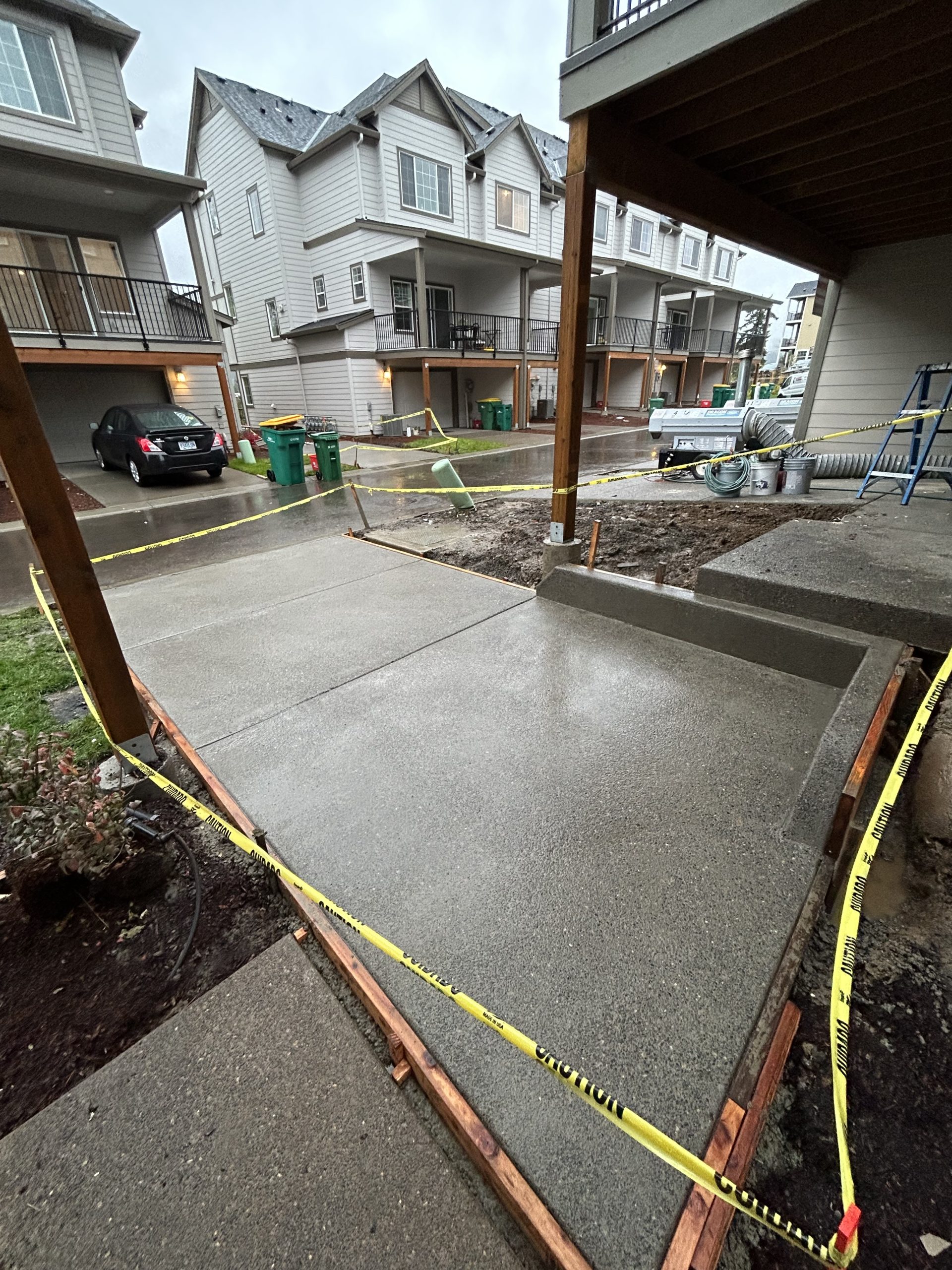
We provide expert residential concrete services, including driveways, patios, walkways, and decorative stamped concrete. Our team ensures that each installation is both functional and aesthetically pleasing, using high-quality materials that stand up to Oregon’s wet climate and seasonal weather changes.
Commercial & Industrial Concrete Solutions
For businesses and industrial properties, The Wallace team offers large-scale commercial paving services, such as shop flooring, curbs, retaining walls, and ADA-compliant sidewalks. We prioritize site preparation and material integrity, ensuring that every project meets the highest standards of durability and performance.
For property owners in Hillsboro, OR, Wallace Construction is the go-to expert for reliable concrete paving solutions. Contact us today to schedule a consultation and experience the Wallace Construction difference.
Services Offered in
Hillsboro, OR

Why Choose Us?
Customer-Focused Service
We emphasize clear communication, transparency, and efficiency to ensure a smooth experience from start to finish, exceeding client expectations every step of the way.Sustainability & Innovation
Our team uses eco-friendly materials and advanced techniques to create durable, high-performance surfaces with minimal environmental impact.Engineering-Driven Approach
With expert knowledge in site preparation, base stabilization, and mix design, we build long-lasting paved surfaces tailored to Oregon’s unique climate.Built to Last
We combine expert site preparation, premium materials, and precision finishing to create durable surfaces that resist cracking, weather damage, and long-term wear.
Hillsboro, OR

As the fifth-largest city in Oregon, Hillsboro is a major economic and technology center with a population of over 110,000 residents. Known as the heart of Oregon’s Silicon Forest, Hillsboro is home to major tech companies, including Intel’s largest research campus. The city also boasts a vibrant cultural scene, diverse dining options, and beautiful outdoor spaces such as Jackson Bottom Wetlands Preserve and Rood Bridge Park.
Hillsboro’s rapid growth has increased the demand for high-quality infrastructure and durable paving solutions. From new housing developments to expanding commercial districts, maintaining strong, well-paved surfaces is crucial for safety and accessibility. Whether it’s a residential driveway or large-scale commercial parking lots, concrete paving plays a vital role in the city’s development.
The Wallace team is proud to serve Hillsboro, OR, with expert concrete installation services tailored to the city’s evolving needs. Whether you’re upgrading a home or planning a commercial project, we’re here to help. Call Wallace Construction today to get started on your next paving project!
Hillsboro, OR Blog Posts
Large-Scale Commercial Slab-on-Grade Concrete Placement in Portland, Oregon
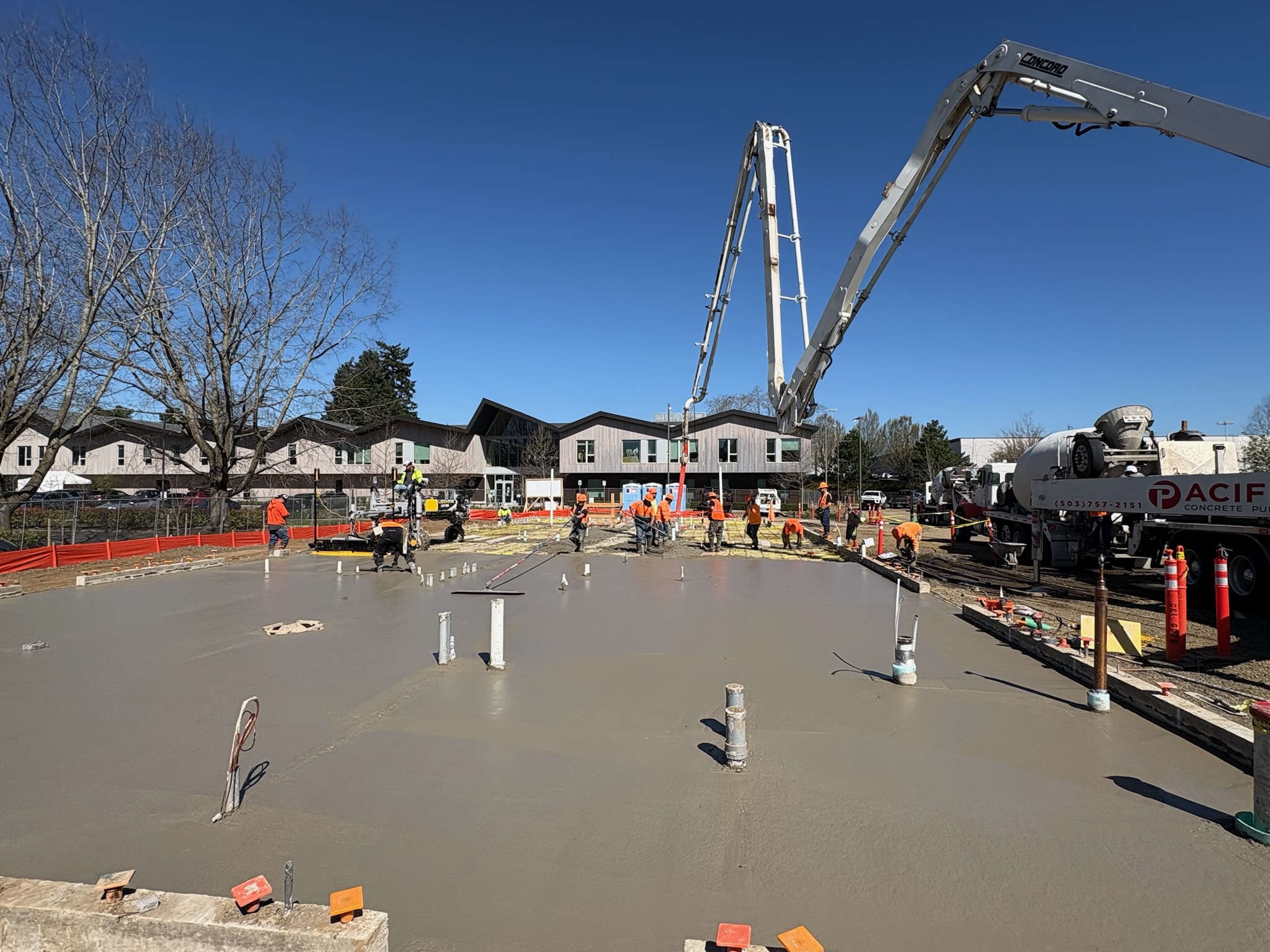
A large commercial slab takes shape across a Portland jobsite. This project gave Wallace Construction a broad slab-on-grade footprint to work across, with the scale of the placement immediately visible in the field. Slab-on-grade refers to a concrete slab placed at ground level as part of a building’s floor or foundation system. In the project photo, a wide section of freshly placed concrete fills the foreground while crews continue working across the active placement area. The defining feature here is not a decorative finish or a small isolated concrete pad. It is the size of the commercial concrete operation and the coordination visible across the site. A Commercial Pour Defined by Scale and Coordination Large slab-on-grade work brings multiple moving parts into the same footprint. The photo shows concrete placement equipment reaching over the work area, workers positioned at different points on the slab, and numerous vertical penetrations extending through the surface. At this scale, the pour itself becomes a coordinated field operation. Placement Equipment Reaching the Work Area A concrete pump boom is visible above the site work, providing reach into the slab area without requiring the concrete delivery point to be located directly beside the placement. Its position…